Abbey of Regina Laudis: Prayer, Pasture and a good Cheese That Refuses to Become Standard

abey of regina laudis cheese

There are places where cheese is not first and foremost a product, but a practice. A craft that settles into the walls — and into the rhythm of the day. The Abbey of Regina Laudis in Bethlehem, Connecticut, is one such place. A Benedictine monastery where the Liturgy of the Hours and farm work move in step, and where milk becomes cheese as a quiet argument that terroir can exist in the United States too.

The monastery was founded in 1947 by Benedictine nuns with roots in the Abbey of Jouarre in France. Since then, it has developed into a small, self-contained world of crafts: theatre, blacksmithing, beekeeping, herbs — and not least, a small dairy.

A Micro‑Dairy Is Born — and Stays

Regina Laudis’ dairy story begins in a concrete and slightly poetic way. In 1975, the monastery received its first cow, Sheba, as a gift from a local farmer. That same year, they became a licensed dairy in the state of Connecticut, and by 1976 they were designated a Dairy of Distinction.

It is easy to read this as a charming curiosity: nuns with cows. But that misses the point. This is not decorative agriculture. It is real work. In the Benedictine tradition, labour (ora et labora) is part of the contemplative life. Here, farming and food production become a practical answer to a simple question: how can a monastery live — and remain economically self‑sustaining?

“The Cheese Nun” and the Science in the Cellar

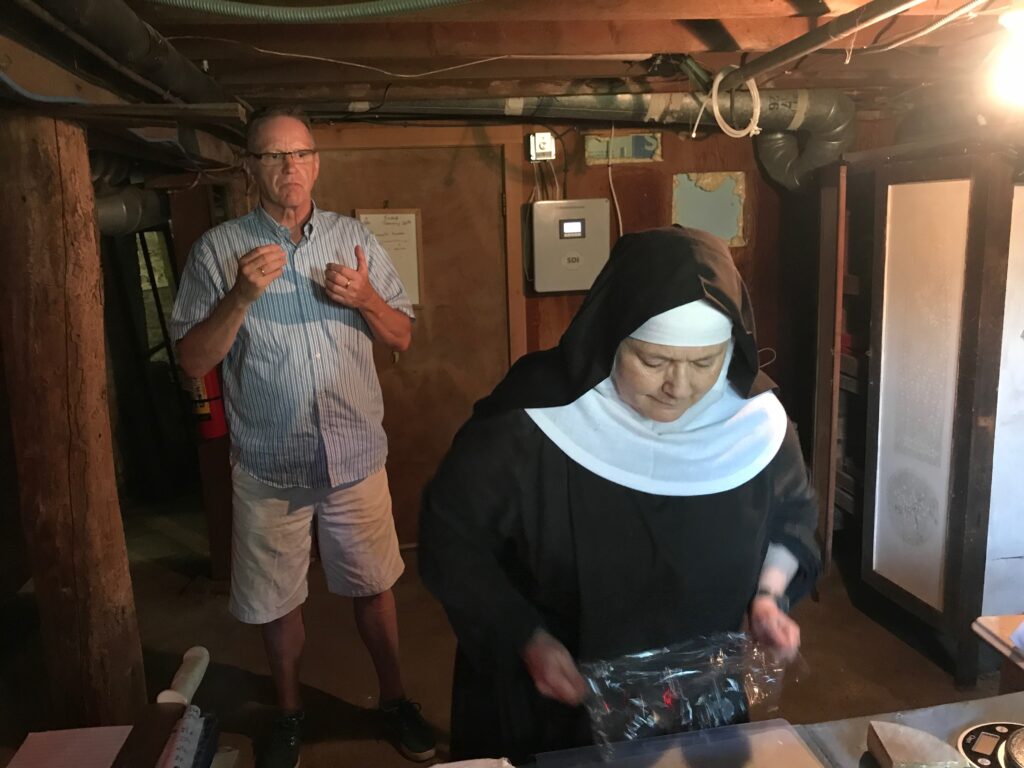
If the Abbey of Regina Laudis is known beyond Connecticut, it is largely because of Sister Noëlla Marcellino — “The Cheese Nun.” The New Yorker profiled her in 2002, followed by a documentary film and a long line of articles about how she combined monastic life with a near‑scientific focus on microbiology and cheese ripening.

The story is typical of Regina Laudis: practical work leads to intellectual depth. Noëlla began making cheese in the late 1970s after being trained by a French cheesemaker invited by the abbess. Later, she and several other sisters entered a doctoral programme at the University of Connecticut to study the microbial ecosystems they were working with every day.

It sounds like something out of a novel, but the point is very down‑to‑earth. To make good raw‑milk cheese consistently over time requires more than romance. It requires clean routines, healthy animals, discipline — and a curiosity that accepts that nature is never exactly the same from one week to the next.

The Milk: Dutch Belted Cows and Conscious Small Scale

Regina Laudis uses milk from its own herd of Dutch Belted cows — a breed that produces rich milk and has become something of a visual signature for the monastery (black bodies with a white “belt,” almost like a monastic habit in animal form).

At a time when American cheese often measures success in volume, this is a different kind of project: small, local and seasonal. The dairy itself describes its purpose as contributing to the sustenance of the community, with “a little” left over to sell.

Bethlehem Cheese: The Monastery’s Signature

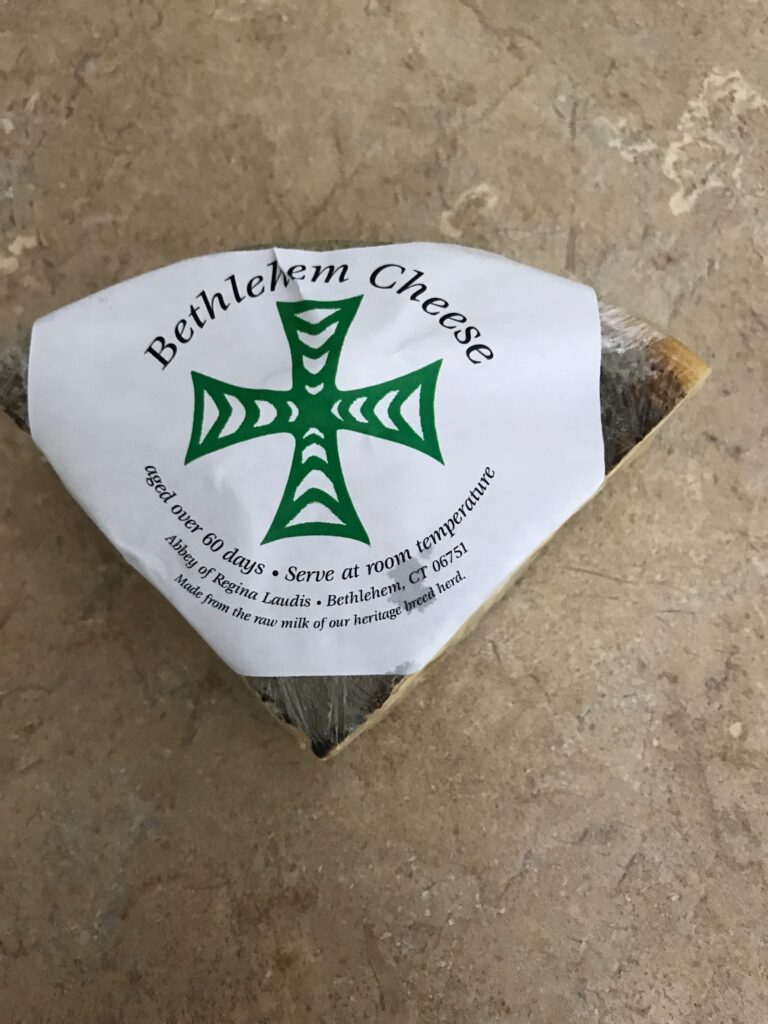
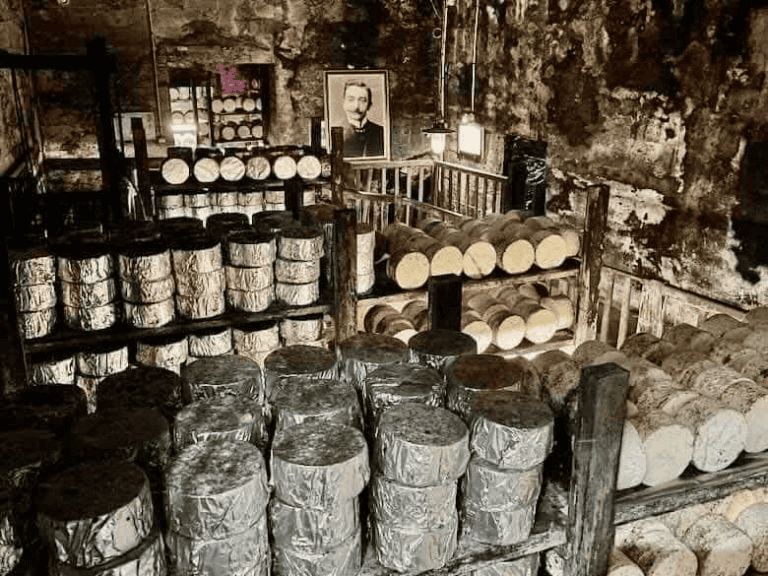
Their best‑known cheese is Bethlehem Cheese — a raw‑milk cheese inspired by the Saint‑Nectaire tradition: a pressed, uncooked cheese with fungal rind development and a pronounced “cave” character when it is at its best.

Here we arrive at the core of why Regina Laudis actually matters in cheese culture. They are not simply making “a cheese.” They are trying to let place, milk and microbes speak — and to take that risk seriously.

abbey of regina laudis cheese

Bethlehem is also interesting because it points to a broader American story. The United States has enormous agricultural potential, but much of its traditional cheese culture has long been imported, copied or industrialised. Regina Laudis goes the opposite way. They take a European idea of farmstead cheese and make it American by building it on their own milk, their own micro‑environment and an extremely slow accumulation of knowledge.

More Cheeses — and Pragmatic Evolution

In addition to Bethlehem, the monastery also makes an alpine‑style cheese (Benedic) and several fresher products such as ricotta, mozzarella and feta.

At the same time, this is a monastery operating in a modern regulatory environment. Some newer products have required pasteurisation in order to be sold legally in certain forms. It is a reminder that the raw‑milk versus pasteurisation debate is not always ideological. Sometimes it is about logistics, law and survival. was appointed and installed as prioress at Our Lady of the Rock Monastery on Shaw Island, Washington, in September 2020.

Where Are They Today?

Today, the Abbey of Regina Laudis stands as one of the rare American cases where farmstead cheesemaking, monastic life and a research‑oriented mindset genuinely meet.

They sell cheese in limited quantities through their own shop and a small number of local outlets.

But perhaps more importantly, they have become a symbol of something that much of modern cheese culture has lost: that small scale is not an aesthetic. It is a method. A way of holding on to a fundamental principle that many cheeses have drifted away from — that flavour does not primarily come from “recipes,” but from ecology.

And that is precisely why this monastery deserves a place on OstePerler. Not because nuns making cheese is exotic, but because it reminds us what cheese can be when it is allowed to be more than a commodity. It can be a place — in concentrated form.

Abbey of Regina Laudis: Prayer, Pasture and a good Cheese That Refuses to Become Standard Read Post »
Pasteurisering: Når vi steriliserer sjelen ut av osten

oster av rå melk

Det finnes få ord i osteverdenen som skaper mer uro enn dette ene: pasteurisering.

Det høres jo uskyldig ut. Klinisk. Fornuftig. Moderne.
Et lite varmebad for melken – og voilà: trygghet, stabilitet, forutsigbarhet.

Men det er også her mange av verdens mest karakterfulle oster mister stemmen sin.

For pasteurisering er ikke bare et teknisk inngrep. Det er et kulturelt, sensorisk og filosofisk valg. Og noen ganger: et tap.

LES OGSÅ: Rå, pasteurisert, termiser eller mikrofiltrert melk


Rå melk er et levende økosystem.

Den inneholder:

  • gjær fra beitet
  • mikroflora fra dyrets pels
  • sporer fra luften
  • terroir i flytende form

Dette er ikke «skitt». Dette er opprinnelse.

Når melk pasteuriseres, skjer én ting først og fremst:

Alt dør.

Alle bakterier.
All villgjær.
All lokal identitet.

Det er litt som å rive alle instrumentene ut av et orkester – og så be orkesteret spille symfonien likevel.

Ja, du kan tilsette nye bakterier etterpå.
Standardiserte. Kontrollerte. Kommersiell kultur.

Men det er ikke det samme.

Det er som å bytte ut et gammelt eiketre med en IKEA-hylle og late som om skogen fortsatt er der.


Hvorfor pasteuriserer vi egentlig?

La oss være ærlige.

Pasteurisering handler først og fremst om tre ting:

  1. Risiko
  2. Skala
  3. Kontroll

Det er lettere å lage tusen tonn ost når melken er pasteurisert.
Det er lettere å få identisk smak hver gang.
Det er lettere å forklare avvik til et forsikringsselskap.

Men ost er ikke yoghurt.

Ost er ikke industriell bioteknologi.

Ost er et gjæret landskap.

Og landskap er per definisjon uforutsigbare.


Den store løgnen: “Du smaker ikke forskjell”

Dette er den mest seiglivede myten i moderne ostekultur:

«Du merker ikke forskjell på ost av rå melk og pasteurisert ost.»

Jo. Det gjør du.

Du merker det på:

  • dybde
  • lengde
  • tekstur
  • aromatisk kompleksitet
  • bitterstoffer
  • umami
  • volatilitet
  • etterklang

Ost av rå melk lever i munnen.
De utvikler seg sekund for sekund.

Pasteuriserte oster er ofte flate.
Rene.
Korrekte.

Men sjelden gripende.

Det er forskjellen på:

  • et håndskrevet brev
  • og en kundeservice-epost.

Roquefort, Comté, Parmigiano, Brie de Meaux – og elefanten i rommet

De mest ikoniske ostene i verden er laget på rå melk.

Roquefort.
Comté.
Parmigiano Reggiano.
Brie de Meaux.
Reblochon.
Munster.
Cabrales

Disse ostene eksisterer ikke på tross av rå melk.

De eksisterer på grunn av rå melk.

Hele deres aromatiske identitet er bygget på:

  • lokale bakterier
  • sesongvariasjon
  • mikrobiell kompleksitet

Pasteuriserer du melken, er det ikke lenger samme ost.

Du kan bruke samme navn. Samme form. Samme modningstid. Men sjelen er borte.


Trygghetens tyranni

La oss snakke om elefanten i det hygieniske rommet.

Ja – rå melk kan være farlig. Men det kan pasteurisert ost også være. Smitte er det noe som heter.
Ja – feil produsert ost kan gjøre folk syke.
Ja – det har vært utbrudd.

Men vet du hva som også er farlig?

  • ferdigsalat
  • kylling
  • rå fisk
  • spirer
  • kjøttpålegg

Vi har valgt å akseptere risiko i nesten all annen mat.

Men i ost?

Der har vi bestemt oss for at:

Null risiko = null karakter.

Det er ikke vitenskap.
Det er politikk.


Når melk blir industriell råvare

Pasteurisering gjør melk til et nøytralt substrat.

Noe du kan forme til:

  • cheddar
  • gouda
  • mozzarella
  • “blue style”
  • “brie style”

Overalt.
Når som helst.
Med samme smak.

Dette er fantastisk for:

  • logistikk
  • eksport
  • supermarkeder
  • volum
  • marginer

Men katastrofalt for:

  • lokal identitet
  • små produsenter
  • terroir
  • smaksmangfold

Det er McOst.


Det vi egentlig er redde for

Pasteurisering er ikke bare en teknisk løsning.

Det er en kulturell forsikring.

Vi har blitt et samfunn som:

  • ikke tåler usikkerhet
  • ikke tolererer variasjon
  • ikke aksepterer at mat lever

Vi vil ha:

  • samme ost
  • samme smak
  • samme tekstur
  • samme opplevelse

Hver gang.

Men da må vi også akseptere:

At alt smaker litt likere.
At alt føles litt flatere.
At alt blir litt mer dødt.


Rå melk er ikke romantikk. Det er realisme.

Dette er ikke et nostalgisk rop om “de gode gamle dager”.

Dette handler om:

  • mikrobiologi
  • økologi
  • fermenteringskunnskap
  • biologisk kompleksitet

Rå melk er ikke uansvarlig.

Dårlig håndverk er uansvarlig.

Det finnes tusenvis av små produsenter i Europa som lager råmelksost hver dag,
helt uten problemer.

De har:

  • streng hygiene
  • kontroll på dyrehelse
  • presis ysting
  • respekt for råvaren

Det er ikke rå melk som er farlig.

Det er inkompetanse.


Det virkelig provoserende spørsmålet

Så her er spørsmålet vi ikke liker å stille:

Er vi villige til å ofre smak, dybde og identitet
for å slippe å forholde oss til risiko?

For hvis svaret er ja –
da bør vi også være ærlige om konsekvensen:

Vi får tryggere ost.

Og kjedeligere ost.


En fremtid uten ost av rå melk?

Se for deg en verden der:

  • Parmigiano er pasteurisert
  • Comté er pasteurisert
  • Roquefort er pasteurisert
  • Brie de Meaux er pasteurisert

Alt er “safe”.
Alt er “consistent”.
Alt er “clean”.

Og alt smaker som en PowerPoint-presentasjon.

Det er ikke en gastronomisk fremtid.

Det er et sykehus.


Konklusjon: Pasteurisering er ikke ond. Men den er ikke nøytral.

Pasteurisering har sin plass.

I:

  • industriell produksjon
  • ustabile melkekjeder
  • høy-risiko miljøer

Men når vi gjør den til norm for all ost?

Da mister vi noe fundamentalt.

Ikke bare smak.

Men forbindelse.

Til:

  • dyr
  • landskap
  • mennesker
  • historie

Ost av rå melk er ikke perfekt.

Den er vanskelig.
Den er av og til uforutsigbar.
Den er levende.

Akkurat som alt som er verdt å spise.

Skrevet med hjelp av research fra AI.

,

Pasteurisering: Når vi steriliserer sjelen ut av osten Read Post »

FACTS ABOUT ROQUEFORT (AOP)

Roquefort

Roquefort-sur-Soulzon
Aveyron, France

Cheese type:
Blue cheese

Milk:
Raw, whole sheep’s milk

Sheep breed:
Lacaune

Origin:
Roquefort-sur-Soulzon,
Aveyron, France


SHAPE AND SIZE

  • Cylinder
  • Diameter: approx. 19–20 cm
  • Height: approx. 8.5–11.5 cm
  • Weight: approx. 2.5–3.0 kg

MOLD CULTURE

Penicillium roqueforti
Develops through piercing (piquage)
and access to oxygen


MATURATION

  • Minimum 90 days
  • Must be aged in the natural caves
    of the Combalou mountain
  • Natural ventilation via “fleurines”

PRODUCTION REQUIREMENTS

  • Milk exclusively from the approved
    geographical milk area
  • Aging exclusively in
    Roquefort-sur-Soulzon
  • No pasteurisation or standardisation
    of the milk

NUMBER OF PRODUCERS

7 approved Roquefort houses


FLAVOUR PROFILE

  • Intense and salty
  • Creamy to crumbly texture
  • Aromas of blue mold,
    cultured butter, nuts, herbs
    and cave

USES

  • Cheese boards
  • Sauces and dressings
  • Gratins and hot dishes

CLASSIC PAIRINGS

  • Sweet wines (Sauternes, Barsac)
  • Alternatively: dry Chenin Blanc,
    Jura wines or oxidative white wines

FACTS ABOUT ROQUEFORT (AOP) Read Post »

Cowgirl Creamery – Well Crafted, Landscape, and Cheese with a Coastal Soul

Cowgirl creamery

California is often associated with technology, wine, and long roads winding between hills and ocean. But in the small coastal town of Point Reyes Station, a very different story took shape — one built on milk, craftsmanship, and two women who chose to follow flavour rather than fashion. Cowgirl Creamery was founded in 1997 by Sue Conley and Peggy Smith, two friends who came from the vibrant restaurant world in San Francisco. Their goal was beautifully straightforward: to make cheese from local organic milk and to help strengthen the agricultural identity of Marin County.

It all began humbly — a tiny creamery built into a renovated barn, surrounded by the quiet, fog-washed farmlands of Point Reyes. Their milk came from Straus Family Creamery, one of California’s early pioneers in organic dairy. At the time, American cheese was beginning its renaissance, but true artisanal, European-inspired cheeses on the West Coast were still rare. Conley and Smith wanted to change that. They wanted to create something that captured the essence of their region, but with flavours that felt generous and approachable.

Naturally, it took time. Cheesemaking is never a quick path, and the early years were filled with trial and error — how soft should the texture be? How long should the wheels mature? How do you create a cheese that reflects California’s climate rather than imitating European models? Slowly, Cowgirl Creamery found its identity: creamy, expressive cheeses with a gentle coastal character, shaped by milk from cows grazing in salt-touched winds and rolling maritime fog.

It didn’t take long before their cheeses gained attention. Their two most famous creations, Mt. Tam and Red Hawk, became national sensations, and Cowgirl Creamery emerged as a defining influence in the American artisan cheese movement — a wave of producers who learned from European traditions but forged their own American voice.


From Pioneer to Icon – and a Turning Point

Through the 2000s, Cowgirl Creamery grew steadily. They opened retail shops, expanded into a larger production facility in Petaluma, and became a beloved destination for locals, travellers, and food lovers searching for a taste of “real California.”

In 2016, Conley and Smith sold the company to Emmi, the Swiss dairy group. The decision sparked mixed reactions — could a global company preserve the spirit of such a deeply local brand? The founders emphasized that the sale would protect jobs and ensure continuity for the organic dairies they relied on. They remained involved, and the cheese styles held their original personality.

But in 2023, news arrived that Emmi would end major cheese production in Petaluma, scaling Cowgirl Creamery back to a retail-focused business rather than a full producer. For many, it felt like the end of an era. Mt. Tam and Red Hawk continue to exist, though in limited form, with an uncertain future.

In a way, this makes the Cowgirl story even more poignant. It reminds us that handcrafted cheese thrives best when the people behind it are free to shape every detail. And it highlights how influential Cowgirl Creamery has been — not despite its origins, but entirely because of them.


The Cheeses – Mt. Tam and Red Hawk

Mt. Tam – Californian Creaminess at Its Best

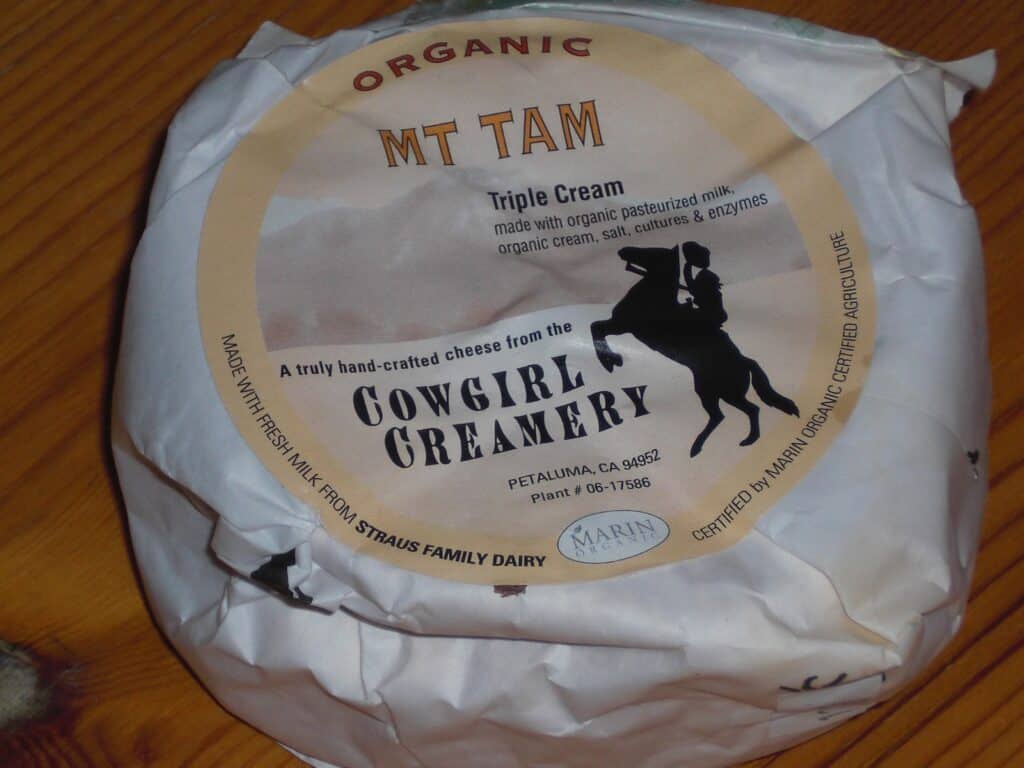
Named after Mt. Tamalpais, Mt. Tam is a triple-cream bloomy-rind cheese made from organic cow’s milk. It is, in many ways, the signature Cowgirl Creamery cheese — soft, indulgent, and utterly comforting, yet with enough nuance to be taken seriously.

Aroma and flavour:
Mt. Tam is buttery, lush, and mild, with a silky acidity that keeps it fresh. The rind brings soft mushroom notes, but the core is all cream, sweet dairy, white flowers and a hint of vanilla. Some batches show a faint green apple brightness at the center.

Texture:
Thick, spoonable when fully ripe, and decidedly luxurious. A cheese that encourages generous wedges, not timid slices.

Pairing:
Lovely with a lightly oaked Chardonnay or a vibrant Loire Sauvignon Blanc for contrast. On a cheese board, Mt. Tam is the friendly star — accessible, but with enough quiet complexity to satisfy seasoned palates.


Red Hawk – the Coastal Washed-Rind Rebel

Red Hawk was created almost by accident. The damp, foggy climate of Point Reyes encouraged the natural growth of B. linens (washed-rind bacteria) in the aging rooms. Instead of fighting the environment, Cowgirl Creamery embraced it. The result became one of the most distinctive washed-rind cheeses in the United States.

Aroma and flavour:
A bold but balanced washed-rind profile: barnyard, seaweed, smoked leaves, a whiff of ocean air. Rich, savoury, and creamy with flavours of bacon drippings, caramelised onion and sautéed mushrooms. It’s bold, but not aggressive — a cheese that grows more nuanced with every bite.

Texture:
Soft and yielding at the center, firmer near the rind. Both rustic and refined.

Pairing:
Dry cider is a perfect match — especially from Normandy or from Sonoma’s newer craft cider producers. A slightly off-dry Gewürztraminer also works beautifully, its aromatic strength standing up to the cheese’s intensity. On a cheese board, Red Hawk is the showstopper.


Why Cowgirl Creamery Still Matters

Even with production scaled down, Cowgirl Creamery remains a milestone in American cheese. They showed that the U.S. could produce cheeses with soul, terroir, and originality — not imitators of Europe, but expressions of place shaped by fog, pasture, and coastal wind.

Mt. Tam and Red Hawk represent two sides of the American artisan revival:
– the creamy, elegant, comforting voice
– and the bold, washed-rind personality that refuses to stay in the background.

Both are essential to understanding what cheese becomes when it is allowed to express its landscape.

Cowgirl Creamery – Well Crafted, Landscape, and Cheese with a Coastal Soul Read Post »

Scroll to Top