
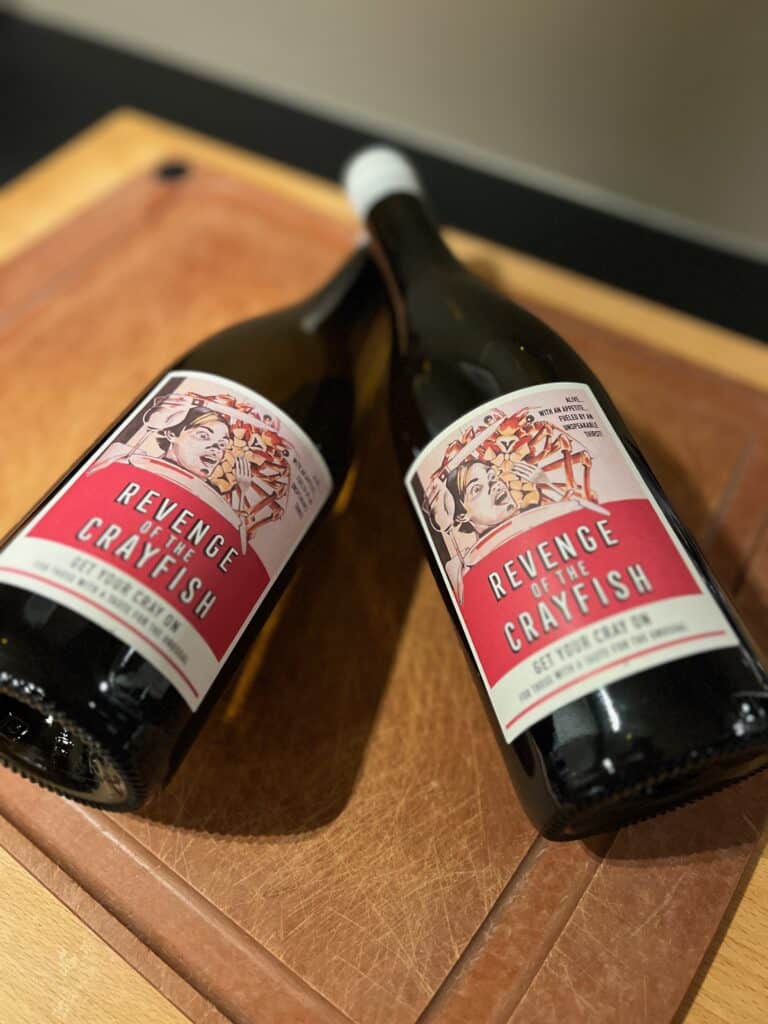
There are winemakers who work in the rhythm of rolling hills, who build their craft among vineyards and small inland villages. And then there is Sakkie Mouton — a man who seems to stand with his feet in the ocean and his wines in the wind off the Atlantic. There is something distinctly South African about him: grounded, proud, shaped by place, yet with a modern sensibility and an instinct for purity. He is not just a producer; he is a creator of expressions.
For those of us drawn to wines with character, nerve, and identity, Sakkie Mouton has quickly become a name that matters. In just a few years he has grown from a local favourite to an international cult figure. Not because of marketing, but because his wines carry the raw beauty of the West Coast with no filter. That is what makes them so fascinating — and so recognisable.
Raised by the Sea – and It Shows in the Glass
Sakkie grew up just outside Vredendal, a small and windswept community where the Olifants River region meets the harsher expanses of Matzikama. This is not classic wine territory. The climate is tough, the soil sandy, and the wind relentless. But the ocean is always there — vast, blue, a little dangerous, and impossible to ignore. The sea is, in many ways, his true terroir.
His family background is one of fishermen, craftspeople, and hard-working people tied closely to the land and water. Being outdoors, being adaptable, and reading the landscape are experiences that shape him just as much as formal winemaking skills. You sense this in the wines: a directness, a natural tension, a refusal to polish away the truth.
When he released his own wines in 2018, it was the Chenin Blanc and Colombard that immediately caught attention. These varieties have long histories in South Africa, yet Sakkie managed to give them a new voice — leaner, saltier, more precise. His wines often show seaspray, citrus skin, crushed shells and a tactile, coastal minerality, like wet stones on a tide-washed beach.
But among them all, one wine has become iconic: Revenge of the Crayfish.
Revenge of the Crayfish – the Story Behind the Name
Crayfish, the small lobster of the West Coast, is a symbolic ingredient in the region — a source of pride, livelihood and even the occasional dispute. But the name is not a marketing gimmick. It refers to a real irritation: crayfish do crawl into the vineyards, damaging irrigation lines and nibbling at roots.
So here comes the revenge — in wine form.
Revenge of the Crayfish is a 100 % Chenin blanc, sourced from old, bush-trained vines growing in sandy soils, often just a short walk from the Atlantic.
The sea is always in the bottle.
Tasting Note: Revenge of the Crayfish 2023
2023 is one of Sakkie’s most complete vintages to date — a perfect equilibrium of acidity, tension and understated fruit.
Appearance:
Pale, almost translucent green-yellow. Quiet in colour, but bright and full of life.
Aroma:
A burst of crushed shells, lime peel, white flowers and unmistakable sea breeze. Hints of fresh pineapple, wet stones and a whisper of fennel.
Palate:
Tight, linear, electrifying. The entry is pure citrus — sharp, clean, high acidity. Then comes the saline midsection, almost mouth-cleansing. Beneath lies a restrained fruit core: green apple, unripe pear, gooseberry. There is a delicate, chalk-like texture from the lees. The finish is long, vibrating, salty and utterly focused.
Food:
Perfect with oysters, grilled cod, ceviche or fresh chèvre. And yes — crayfish, if you want to complete the circle.
Tasting Note: Revenge of the Crayfish 2024
2024 is a different expression. Slightly riper, more generous, but still unmistakably Sakkie. Where 2023 is taut and lean, 2024 is broader, more aromatic and sun kissed.
Appearance:
Light straw yellow with a subtle golden tint — slightly deeper than 2023.
Aroma:
Fruit stands out more clearly: yellow apples, white peach, lemon zest. Maritime notes still dominate — seaweed, granite, salt. A delicate nuance of mandarin blossom and thyme.
Palate:
The mouthfeel is rounder, but the acidity remains high — just better integrated. Flavours of ripe lemon, apple skin and a soft, almost powdery minerality. The texture feels like crushed limestone, energetic and gripping. The finish is broader, warmer, but still precise and driven by that familiar coastal saltiness.
Food:
Brilliant pairing for seafood pasta, grilled squid and chèvre. A beautiful summer wine — or a companion to any dish that benefits from freshness and nerve.
Why His Wines Resonate – and Why They Belong on Osteperler.no
Sakkie’s wines are not heavy, monumental or baroque. They are lean, raw, sensory. They remind us that terroir is not only soil and altitude, but also tradition, climate, memory and scent. Which, of course, mirrors the world of cheese perfectly.
The salty, razor-sharp profile of Revenge of the Crayfish is a natural match for Loire-style goat cheeses, and even mid-aged alpine cheeses, where the wine sharpens the sweetness and nuttiness beautifully.
There is something poetic about how his wines and artisanal cheeses echo one another: both crafted by people who are close to the land, who work with nature rather than around it. Both honest. Both demanding of attention.
A Winemaker to Watch — and to Taste Often
It is easy to get swept up in new cult producers, but Sakkie Mouton stands out because he never chases perfection. He chases expression. His wines are not constructed — they are felt. They carry wind, stone and sea.
If you want to understand what modern coastal South Africa can be, Sakkie Mouton is essential tasting.